
Maria Batulan Taguba was born on May 23, 1926, to Gerardo and Alejandra (née Batulan) Taguba in the Municipality of Iguig, Cagayan, Philippines. Her early years were spent in the rural agricultural Cagayan Province of northern Luzon.
A few months after her 16th birthday, Imperial Japan began a coordinated invasion of the Philippines by sea and by air on December 8, 1941, just a few hours after the attack on Pearl Harbor. One prong of the sea invasion started in Taiwan (Formosa) and rapidly progressed south through Luzon Strait to the northern coast of Luzon, the largest of the islands.
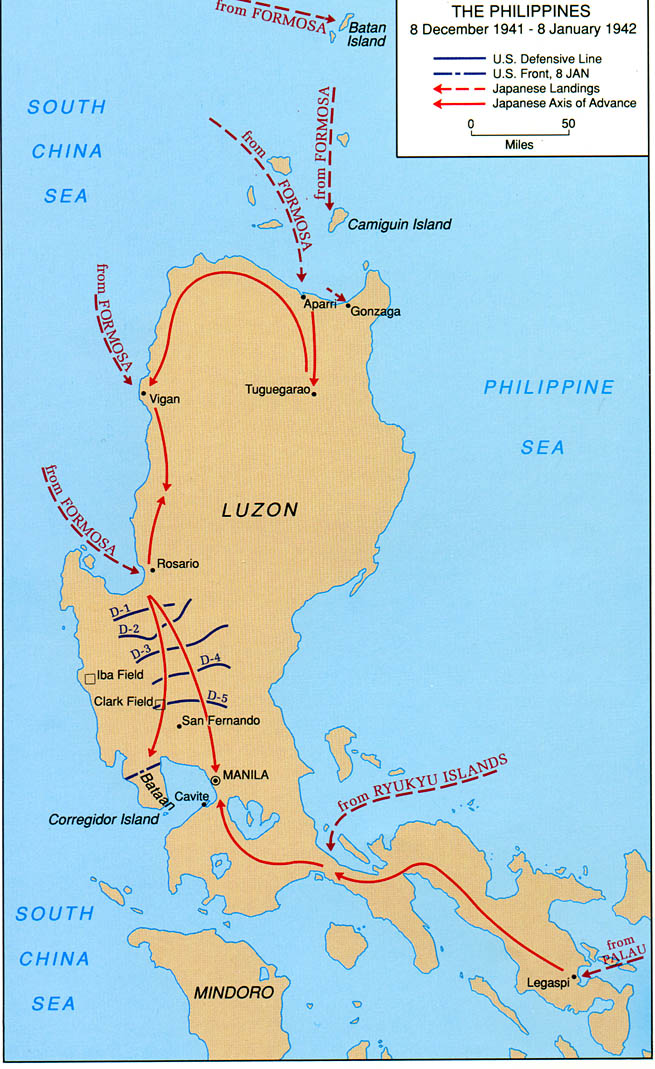
Part of the attack force made landfall on December 10, 1941, at Aparri, a small village at the mouth of the Cagayan River. A portion of the force split west while the remainder pushed 64 miles south to Tuguegarao via the Cagayan Valley Road, arriving there by December 12, 1941. On the way to Tuguegarao, the Japanese Army passed through Tomas’s (and later Lita’s) hometown of Estefania. Since Maria’s home of Iguig was only another 4.5 miles further south, it did not take the Japanese long to reach there.
Maria, her parents and brothers and sisters dispersed just in time to avoid capture by Japanese troops. Despite her young age, she then journeyed to Manila to find shelter with an aunt in the Sampaloc district of Manila.
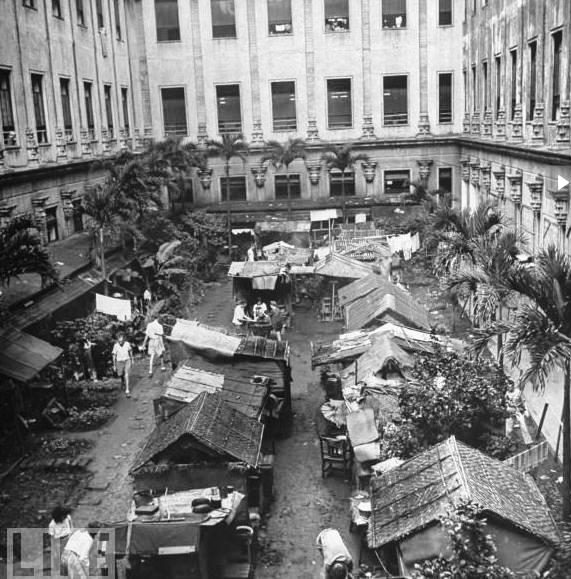
Where Maria lived with her aunt was not far from the “Royal and Pontifical University of Santo Tomas” or more simply, the University of Santo Tomas. In January 1942, Japanese forces converted the campus into an internment camp for “enemy aliens” rounded up in Manila. These included Americans, British, Filipinos and others. It is estimated that nearly 4,000 prisoners or “internees” were kept in this one camp, the largest of several in the Philippines, from January 1942 until February 1945 when it was liberated by American forces.
Hundreds if not thousands of Filipinos and other non-internees reportedly gathered around the 48-acre campus each day to pass food, water and other items to the occupants. Maria, her aunt and other family and friends did the same until the Japanese stopped it. At some point Maria was beaten and detained at the now infamous Santo Tomas Internment Camp. She later told her children stories about having assisted U.S. Army nurses caring for captured civilians and American soldiers. She also spoke of witnessing starvation, helplessness and human suffering caused by a brutal enemy on noncombatants. During her captivity, she saw Japanese soldiers torturing and killing numerous detainees at Santo Tomas.
She also later recalled the massive destruction in Manila. On December 26, 1941, with Japanese troops quickly advancing from the north and south, General Douglas MacArthur declared Manila an “Open City” to spare the capitol and its inhabitants. An “open city” is one which, as defined during wartime, has ceased all defensive efforts to avoid further death and destruction. Once a city has formally made this Declaration, the invading force is expected to peacefully occupy the city instead of destroying it. Unfortunately for Manila and its citizens, this was ignored as the Japanese continued to bomb the city. Jumping ahead, when General MacArthur returned in late 1944 and early 1945 to retake the Philippines, the Imperial Japanese Army redoubled their efforts to defend the islands and most of Manila was reduced to ruins. All in all, around 500,000 Filipinos are thought to have died during the Japanese occupation.
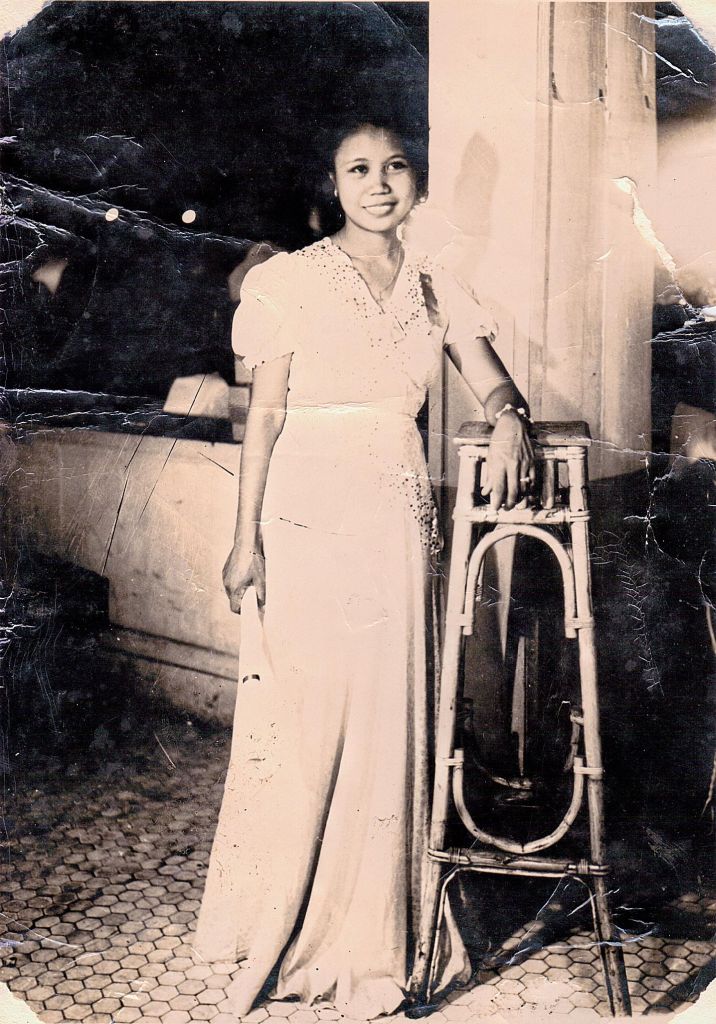
At the conclusion of World War II and when she considered it safe, Maria returned to her hometown of Iguig. There was much work to do to recover from the devastating effects of the war. A little over seven months after Japan surrendered, Maria married Tomas Taguba in a Catholic Church in the municipality of Amulung, Cagayan Province on April 25, 1946. They had known each other many years. The newlyweds lived in Tomas’s hometown of Estefania.
For his extraordinary service with the U.S. Army in the Philippines during World War II, Tomas was granted U.S. citizenship and re-enlisted in the U.S. Army in July 1946, just three months after his marriage to Maria. Tomas was subsequently gone a great deal due to his U.S. Army career in those post-war years and he was not able to be a long-term member of the household for many years.
Maria and Tomas’s first child, Estrellita (“Lita”), was born on March 26, 1947 in Estefania.
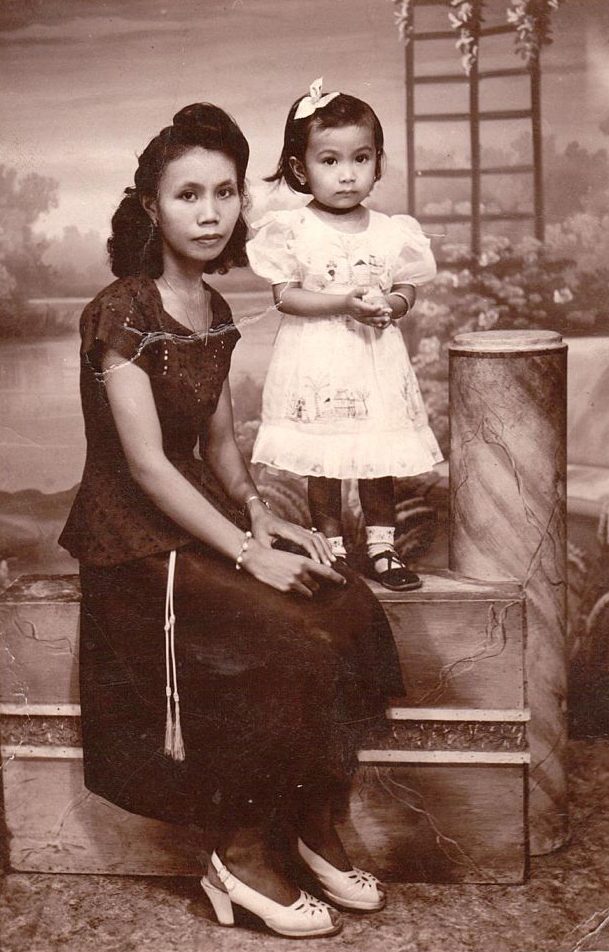
In late 1949 or early 1950, when Maria was nearly 24 years old, she and Lita left “the provinces” and moved far south to the Sampaloc district of Manila. Maria had somehow saved enough money to purchase a small parcel of land for the new family to call home. There was also extended family there, including the aunt she had lived with a few years earlier during the Japanese occupation.
With Lita’s birth, it is now time to switch our story over to her pages. Please click here to continue.